Transmission in Epidemiological Models and its Role in the Disease-Diversity Relationship
Spillover of bovine Tuberculosis (bTB) from its reservoir, the African Buffalo, to a novel host, the African Bush elephant. Both the direct and indirect (environmental) transmission routes are illustrated, show an approximation of the stages of transmission as described by McCallum et al. (2017). The progression of the mycobacterium is shown in orange, evident in the lungs of both hosts, as well as their dispersal propagules.
This work is being led by Marjolein (Marie) Toorians.
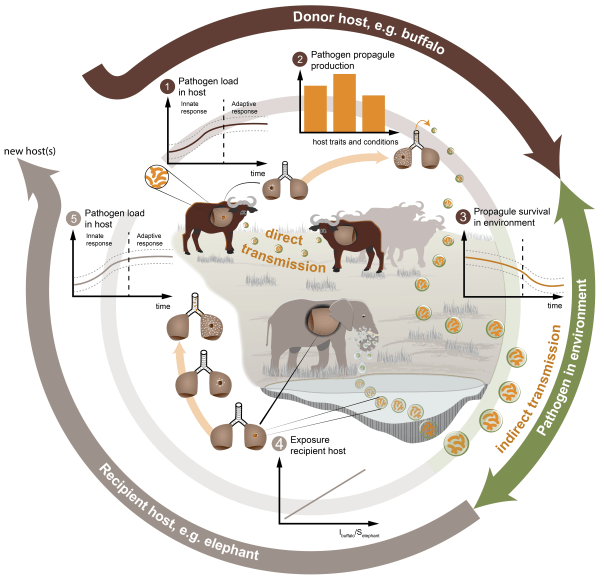
Figure created by Sylvia Heredia (UBC Zoology)
The Microbiome of Waterholes: DNA Barcoding across the Kingdoms of Life
Biological monitoring is an essential part of conservation. Monitoring is often undertaken in response to threats of emerging diseases and invasive species. In the African savanna shared waterholes are a vital resource for many animals, but they can also be a source of infection. In this exciting new project we look to explore the potential of environmental DNA (eDNA) for rapidly describing biological communities associated with shared water resources in the Kruger National Park, South Africa.
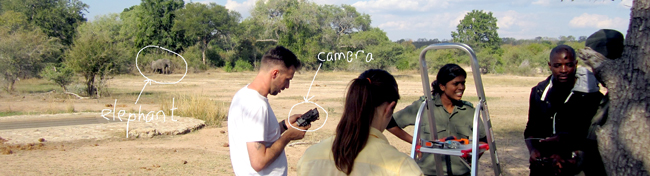
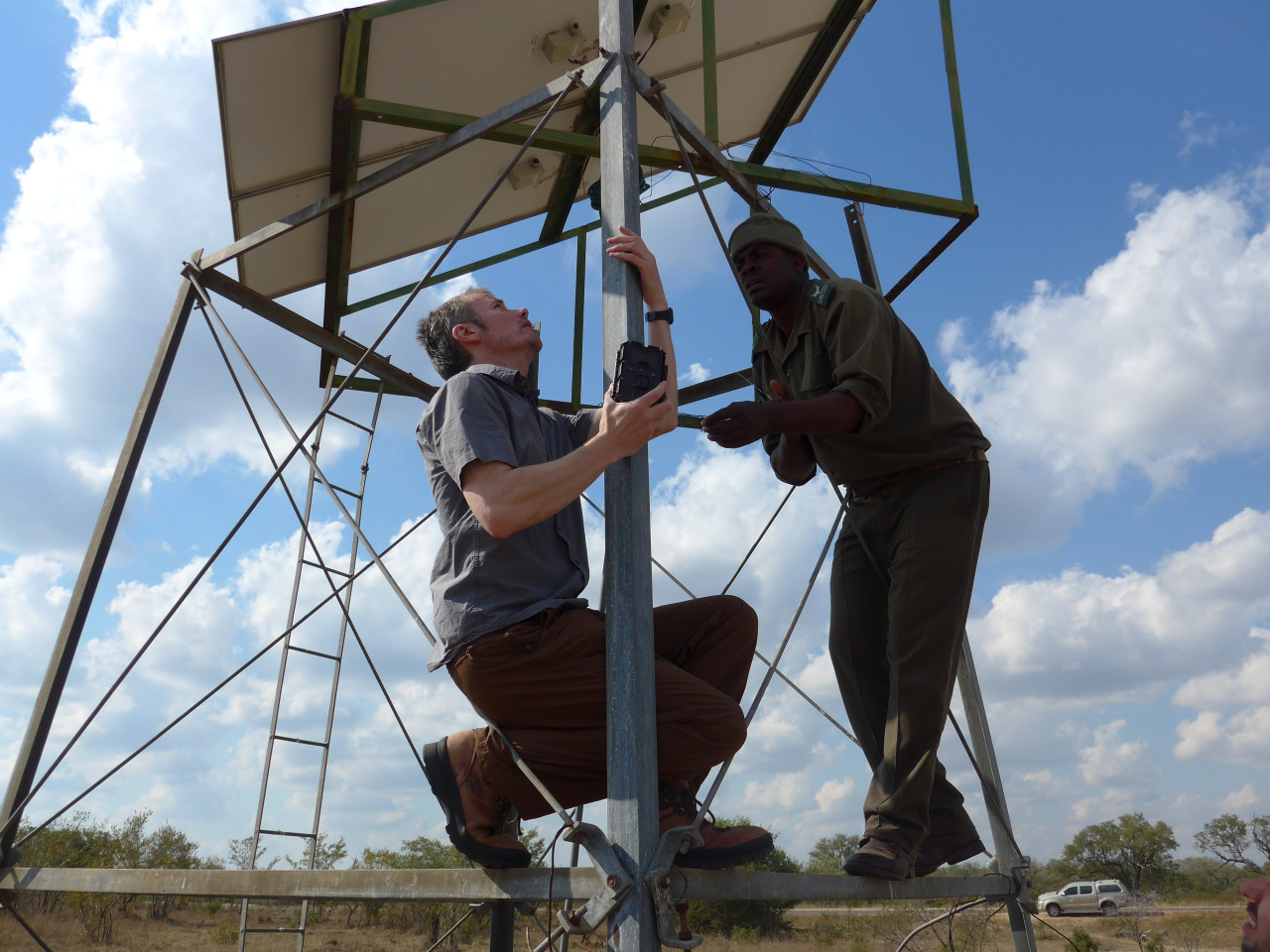
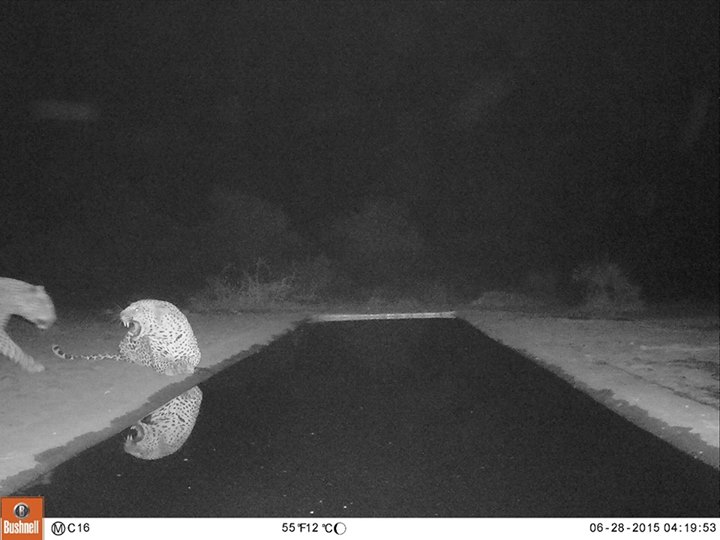
Our study will provide proof of concept that eDNA from the different kingdoms of life can be extracted from water and used to characterize the network of associations among species.
Recent advances in genomic technologies have allowed for in-depth exploration of ecological communities, and the ability to detect organisms from environmental samples with great sensitivity. Sequencing of eDNA is already beginning to be used in surveillance of human pathogens and metagenomic tools may provide a valuable aid for conservation management and the assessment of ecosystem health. Generating networks of genomic associations among microbes and vertebrates might allow us to detect previously unrecognized carriers of disease, characterize important mutualists present in healthy systems, and identify potential threats to ecosystem health before they arise.
This work is being led by Max Farrell.
South African National Botanical Garden Malaise Programme
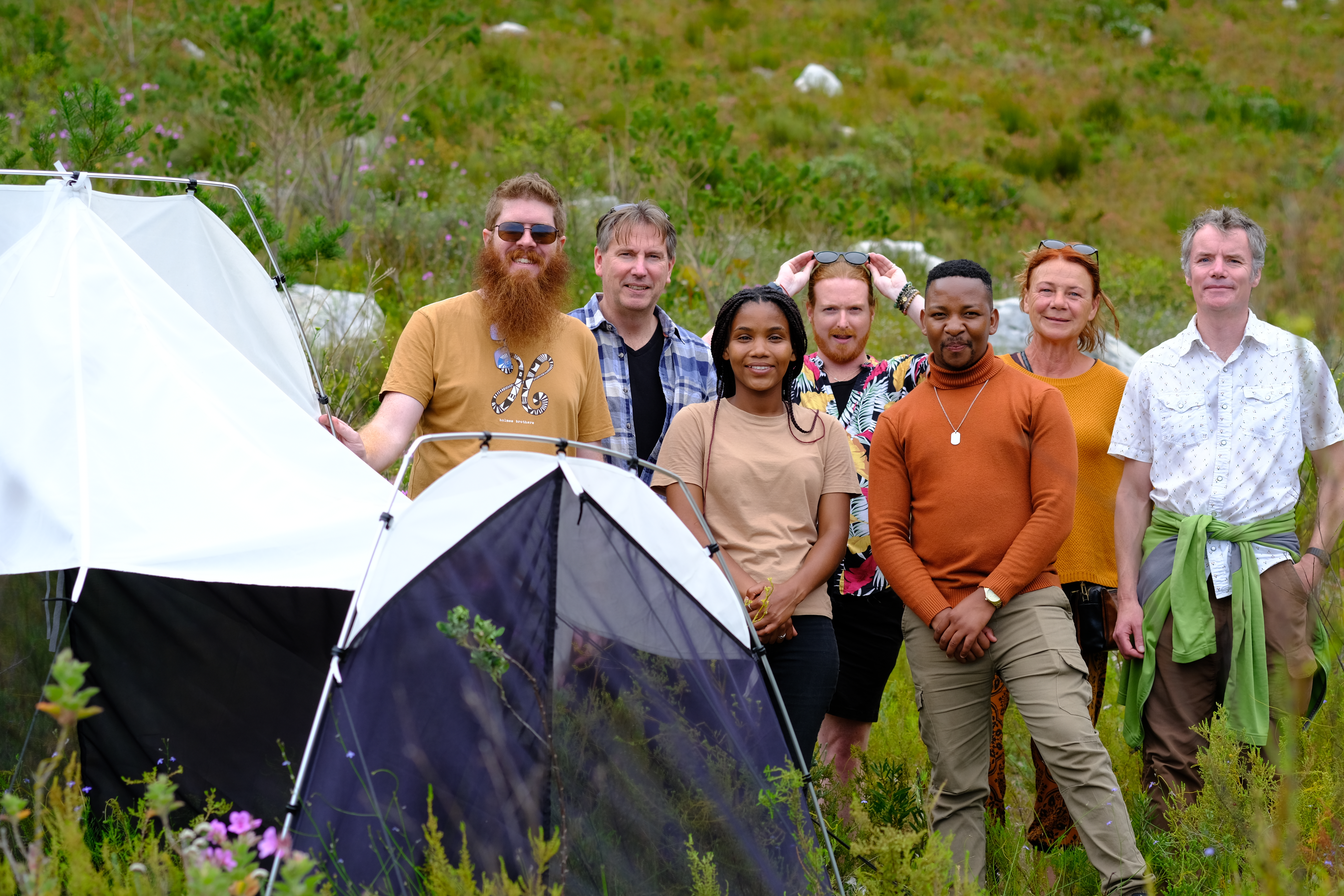
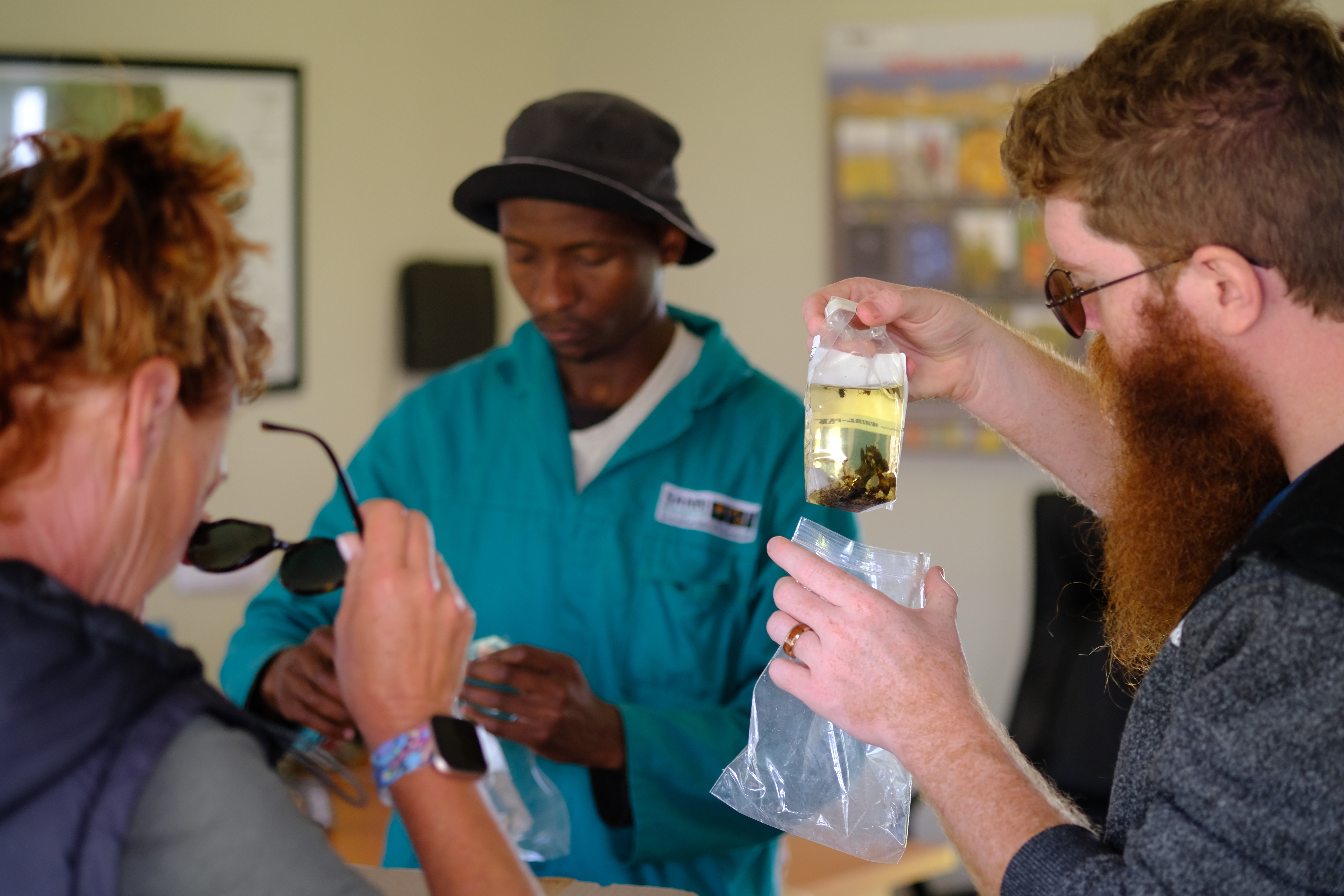
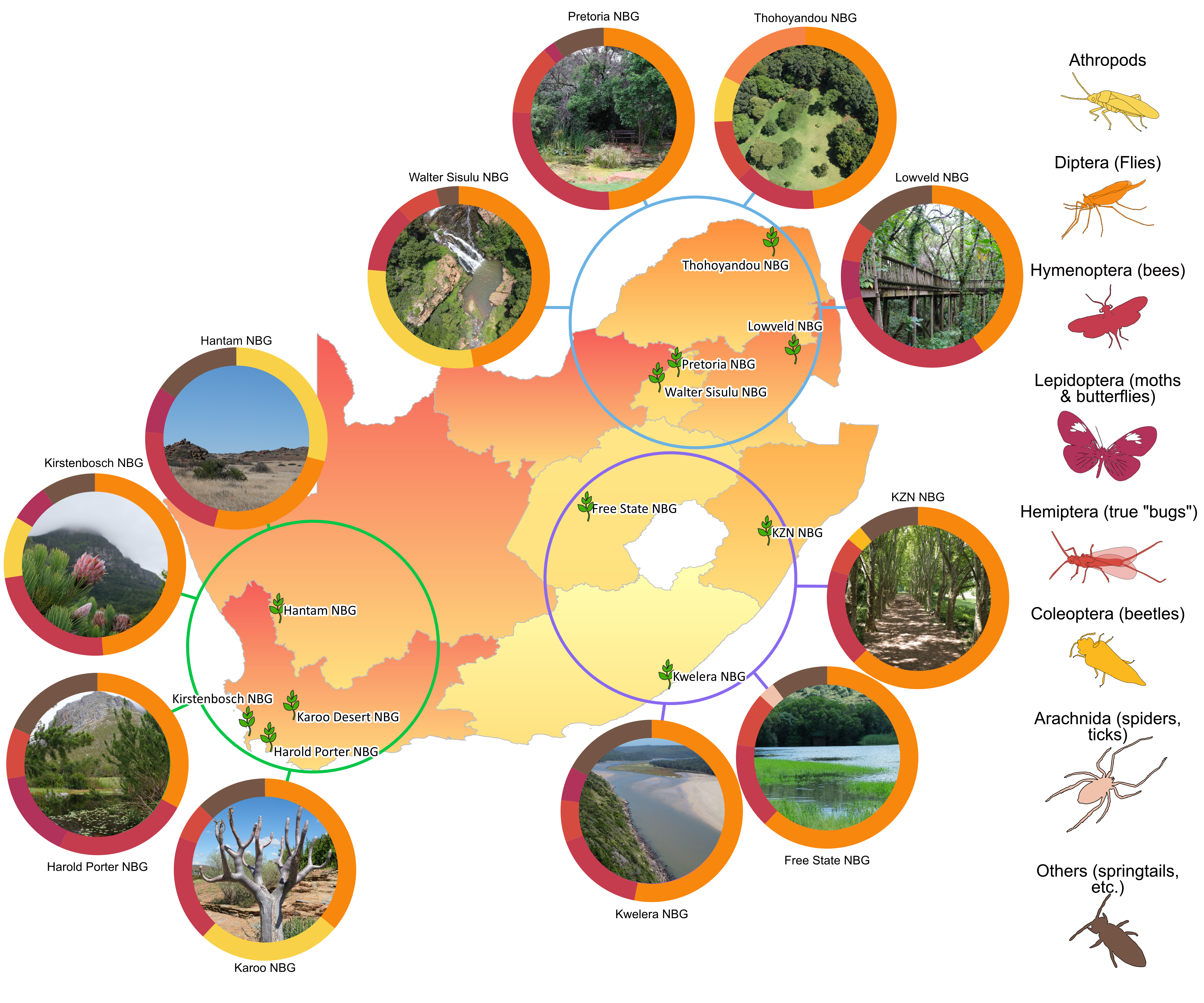
The National Botanical Garden Malaise Programme (NBGP) aims to develop a comprehensive inventory of Malaise-trappable arthropod species in all eleven South African National Botanic Gardens by coupling a year-long sampling program with subsequent DNA barcode analysis of the specimens. Malaise traps were deployed at 22 sites (two traps per NBG – one in the cultivated part of the garden and the other in the non-cultivated part), and sampled weekly. This data will help form a baseline of South Africa’s insect composition in the face of climate change.
This work is coordinated by Ross Stewart
 The PhyloEcology Lab